
Tesla's AI Revolution
Optimus now learns tasks by watching humans on video, and it runs on the same AI as FSD. I think that convergence is the real Tesla story right now.
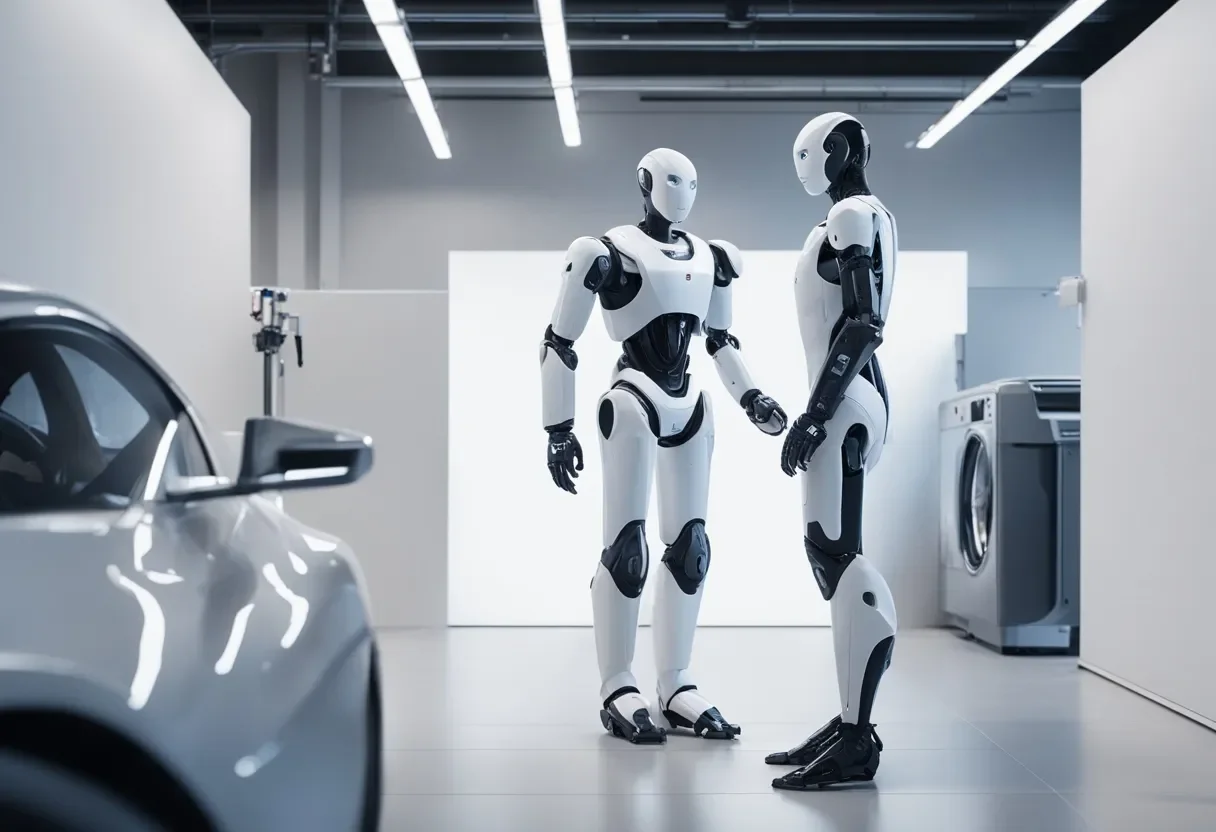
How Robots and Self-Driving Cars Are Converging to Transform Our Future
Tesla has made a groundbreaking advancement in robotics that signals a fundamental shift in how artificial intelligence will shape our future. The company recently demonstrated its Optimus robot's ability to learn complex tasks simply by watching human demonstrations - a capability that could revolutionize how robots are trained and deployed at scale.
Unlike traditional robotics companies that rely on manual programming and motion capture to teach robots specific movements, Tesla has developed an AI system that can observe human actions through video and translate them into natural robotic movements. This approach mirrors how humans learn new skills by watching others, whether it's cooking a meal or operating machinery. The implications of this development are profound, as it dramatically accelerates the process of teaching robots new capabilities while making them more adaptable to different tasks and environments.
This breakthrough in robot learning connects directly to Tesla's self-driving car technology. The same AI architecture that allows Optimus to learn from observation is enhancing Tesla's Full Self-Driving (FSD) system. The massive computing power required to process and learn from visual data for robotics is simultaneously making Tesla's vehicles smarter and more capable of handling complex driving scenarios.
The company's unique position in manufacturing at scale provides another crucial advantage. Tesla's experience producing millions of electric vehicles has given it the expertise and infrastructure to potentially mass-produce sophisticated robots cost-effectively. This manufacturing capability, combined with their AI learning system, could enable Tesla to deploy robots in numbers that would dramatically reduce per-unit costs while increasing their practical utility across various applications.
The regulatory landscape is also shifting in Tesla's favor. Recent developments suggest a more welcoming approach to autonomous technology from transportation authorities. The Secretary of Transportation's visit to Tesla signals a potential breakthrough in creating a unified federal framework for self-driving vehicles, which could accelerate adoption across the United States.
This convergence of robotics, artificial intelligence, and autonomous vehicles positions Tesla not merely as a car manufacturer but as an AI company whose products serve as vessels for increasingly sophisticated artificial intelligence. The company's ability to scale both production and learning capabilities across multiple product lines suggests we're approaching an inflection point where autonomous technologies become mainstream.
The implications extend beyond transportation and robotics. Tesla's AI architecture could potentially power various autonomous systems, from drones to industrial equipment, creating a new paradigm for how machines learn and adapt to human needs. As these technologies mature and regulatory frameworks evolve, we may be witnessing the early stages of a transformation that will fundamentally change how we live and work alongside intelligent machines.
This evolution represents more than just technological advancement - it's a shift toward a future where artificial intelligence becomes increasingly integrated into our daily lives, with Tesla positioning itself at the forefront of this transformation. The company's holistic approach to AI, manufacturing, and scalability could well define the next era of human-machine interaction.