
SpaceX’s IPO Isn’t About Rockets Anymore
SpaceX filed for the biggest IPO ever with a $5B loss on the books. But one $15B-a-year compute deal buried in the filing rewrites what this company actually is.
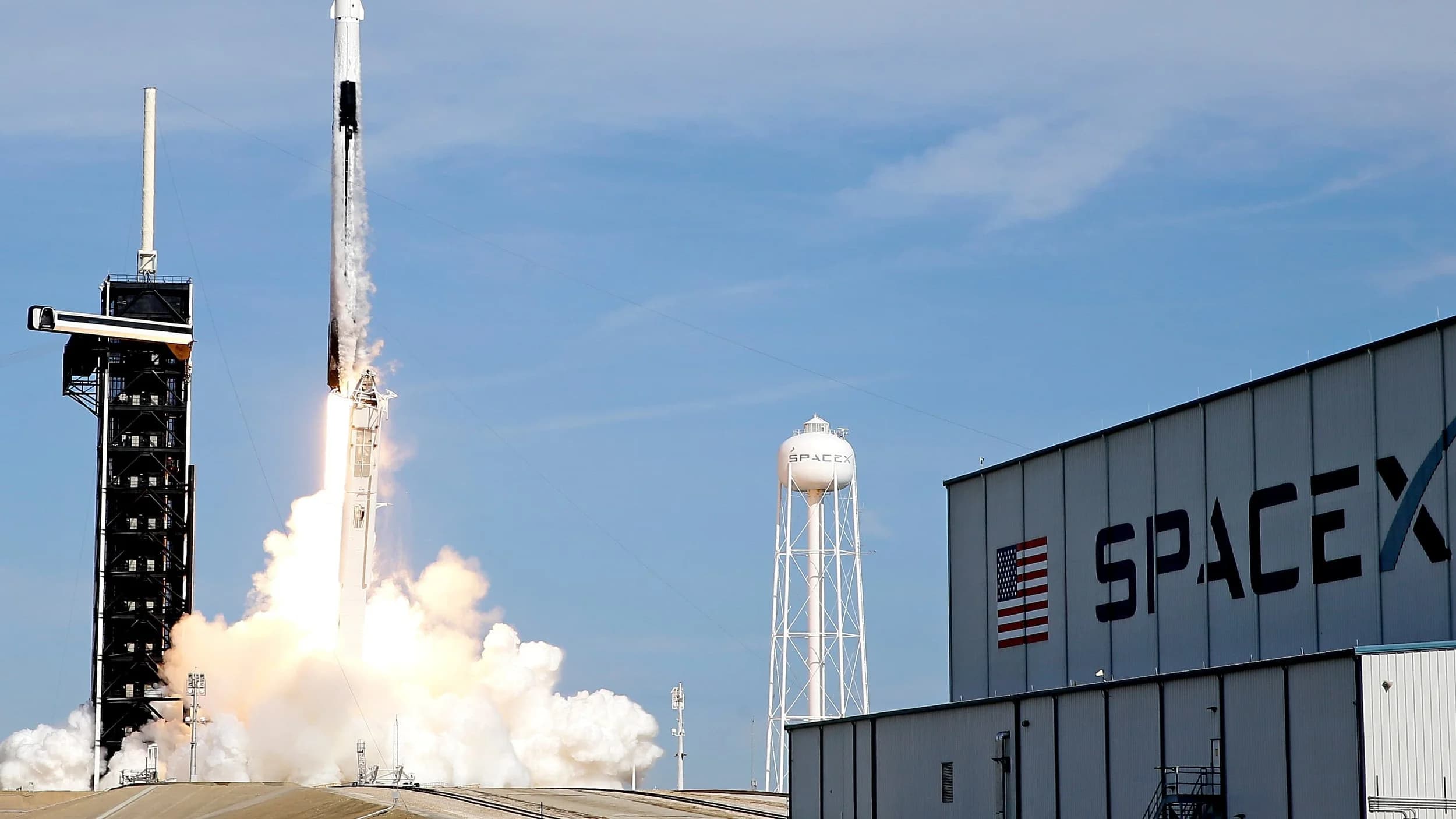
The $15 Billion Anthropic Deal That Turns a $5 Billion Loss Into the Blueprint for AI Infrastructure Dominance SpaceX just filed the paperwork for what could be the largest IPO the world has ever seen, and the numbers look wild at first glance: nearly $5 billion in losses last year. But buried inside the filing is a single customer agreement that rewrites the entire narrative. One of the top AI labs on the planet has committed to paying SpaceX roughly $15 billion a year for computing power through 2029. That deal alone flips the story from “expensive rocket company bleeding cash” to “picks-and-shovels supplier for the AI gold rush with a high-margin cash engine already in orbit.”
Key Takeaways
SpaceX now operates as three distinct businesses: traditional space launches, Starlink satellite internet, and a fast-growing AI compute division powered by massive data centers.
Starlink delivered $11 billion in revenue in 2025 (61% of total company revenue) and generated more than $7 billion in adjusted cash flow at roughly 63% margins.
A single AI customer, Anthropic, signed on for $1.25 billion per month in compute revenue through May 2029, instantly turning the AI segment into a potential profit center.
The rocket business is still investing heavily in Starship (nearly $3 billion in R&D last year), but Falcon 9 operations remain solidly profitable and will soon be joined by paying Starship missions in the second half of 2026.
Orbital data centers are on the roadmap for 2028, solving Earth’s power-grid and cooling bottlenecks with unlimited solar energy and infinite radiator space in vacuum.
The company ended March 2026 with $15 billion in cash after a heavy burn quarter, but incoming AI revenue streams are expected to slow or reverse that trend rapidly.
The Three Businesses Inside One Company The S-1 filing reveals SpaceX has quietly evolved into something far more complex than a launch provider. The “Space” segment covers Falcon 9, Starship development, and government/commercial missions. It brought in about $5 billion last year but posted an operating loss—almost entirely because of the $3 billion poured into Starship R&D. Once Starship begins flying paying payloads later this year, that segment should swing back toward profitability.
The real engine room is the “Connectivity” segment—Starlink. Ten million subscribers across 164 countries, more than 10,000 satellites in low-Earth orbit, and direct-to-cell service already reaching seven million devices monthly. Growth hit nearly 50% year-over-year. At 63% adjusted EBITDA margins, Starlink behaves more like high-margin software than traditional hardware infrastructure. That cash flow is the fuel for everything else.
The newest piece is the “AI” segment, created after SpaceX acquired xAI earlier this year. It includes Grok, the X platform, and the Colossus-scale data centers packed with hundreds of thousands of GPUs. Last year it generated $3 billion in revenue but showed a $6.4 billion operating loss. That headline number is what most coverage focused on—until you read the next page of the filing.
The Compute Deal That Changes the Math In May 2026, SpaceX signed a multi-year agreement giving Anthropic access to its GPU clusters. The terms: $1.25 billion per month through May 2029. That is not a one-off; it is recurring revenue at a scale that dwarfs most entire tech businesses. A second, smaller deal with the AI coding tool Cursor came with an option for SpaceX to acquire the company outright at a $60 billion valuation post-IPO.
This is the classic “picks and shovels” play. While everyone else races to build better AI models, SpaceX is becoming the company that owns the power, the chips, the cooling, and soon the orbital real estate those models run on. When the most sophisticated AI lab in the world chooses to write a $15-billion-a-year check instead of building its own data centers, the market has spoken.
Starlink Cash Funds the Moonshot—Again This pattern is not new for Musk-led companies. Starlink’s $7 billion in annual cash flow is now subsidizing the AI build-out in exactly the same way Amazon’s retail profits once funded AWS, or Tesla car sales fund autonomy and robotics. The filing makes the flow visible on one income statement: profitable connectivity cash is literally offsetting the AI segment’s current losses. Once the Anthropic revenue starts hitting the books in earnest, the combined company could turn profitable as early as 2026.
Orbital Data Centers: The Real Science-Fiction Play The filing also confirms plans to begin deploying “AI compute satellites” as early as 2028. The logic is straightforward once you run the numbers. On Earth, data-center growth is slamming into three hard walls: electricity supply, cooling infrastructure, and physical real estate. In sun-synchronous orbit, solar panels face constant sunlight, heat radiates freely into the vacuum, and expansion space is literally infinite. Starship’s payload capacity makes lofting entire GPU clusters economically feasible for the first time.
Risks the Filing Is Required to Highlight No honest IPO document skips the hard parts. SpaceX lists three big ones:
Key-person risk – The company remains highly dependent on Elon Musk’s continued involvement, even though his time is split across multiple ventures.
Cash burn – The quarterly drop from $24 billion to $15 billion cash in early 2026 was steep, though incoming compute contracts should ease that pressure.
Governance – Dual-class shares keep voting control firmly with Musk (roughly 85% pre-IPO). The structure mirrors Meta’s and is designed to protect the long-term Mars mission from short-term shareholder pressure.
Investors will ultimately decide whether that control is a feature or a bug by voting with their wallets.
Why the Timing Matters SpaceX is set to list on Nasdaq around June 12. At a rumored valuation approaching $2.5 trillion, it would eclipse every previous IPO on record. The market will price in not just today’s Starlink profits and Falcon launches, but the belief that SpaceX can own the physical layer of the AI era—on the ground and in orbit—while still pursuing human settlement of Mars.
The numbers in the filing are no longer about a rocket company that happens to lose money developing the future. They describe an infrastructure powerhouse already collecting massive checks from the AI industry it is helping to scale. For anyone tracking the next decade of technology, this IPO is not just another stock offering. It is the moment the picks-and-shovels thesis for AI moves from theory to balance-sheet reality.