
Federal Framework Set to Revolutionize Self-Driving Vehicle Industry
Federal self-driving regulation could unlock all 50 states at once. I think only a few companies - cheap cars, scalable AI - are actually built to drive through that door.
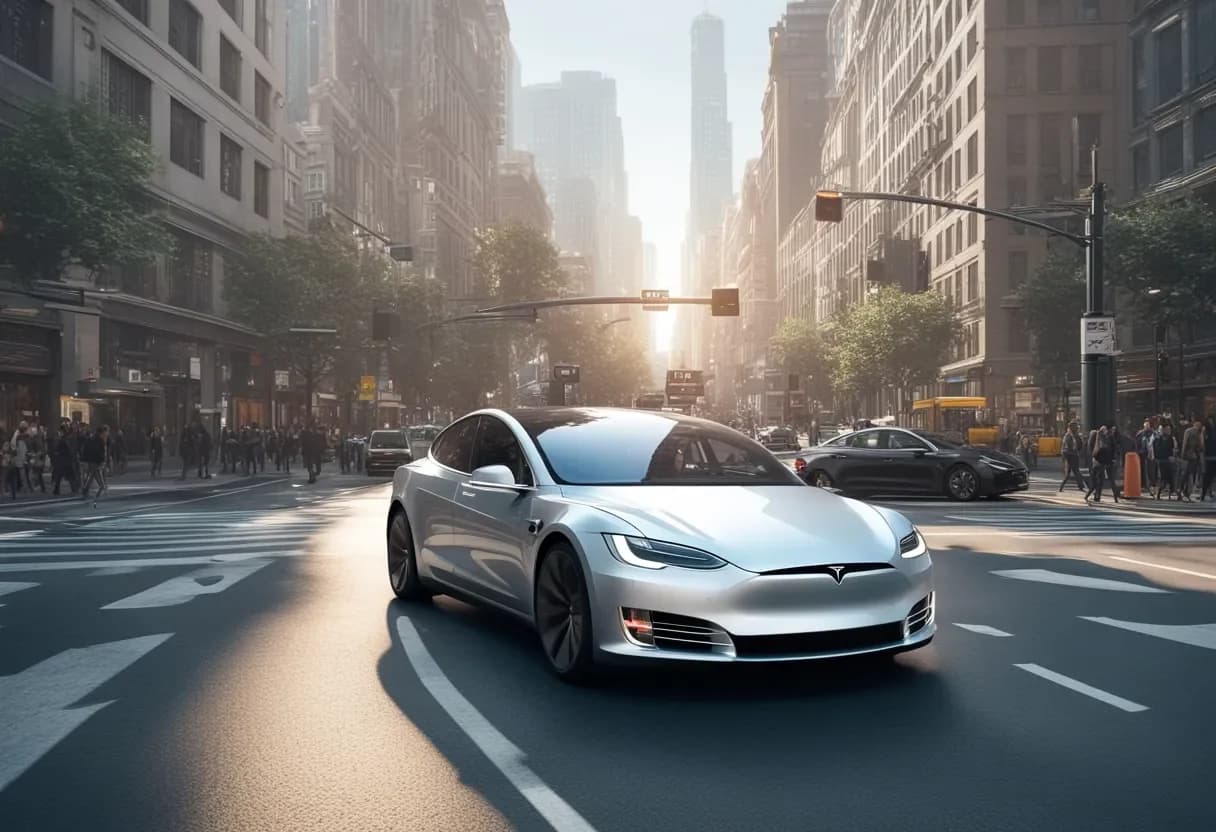
For years, the self-driving industry has been throttled not by technology, but by regulation. A patchwork of inconsistent, state-level rules made it nearly impossible to scale autonomous operations across the U.S.
That’s about to change.
A new federal framework is poised to replace this fractured system with unified national standards—unlocking the ability for companies to deploy autonomous vehicles across all 50 states. And the first movers are ready. Manufacturers with scalable tech stacks and low-cost vehicles could activate entire fleets with a software update—turning regulatory chaos into rapid market capture.
Inside this breakdown:
How sub-$35,000 autonomous vehicles create an unbeatable cost advantage
Why state-by-state regulation stifled deployment—and how federal standards change everything
The key technical differentiators between scalable AI systems and hardware-reliant competitors
And what full-market activation means for commuting, car ownership, and long-distance travel
The road is about to open—and only a few companies are ready to drive through.
Industry Analysis and Market Impact
The autonomous vehicle industry stands at a pivotal moment with the introduction of a unified federal framework that promises to streamline the deployment of self-driving technology across the United States. This development addresses a long-standing challenge in the industry, where varying state regulations have created significant barriers to widespread adoption and deployment of autonomous vehicles.
The current landscape of autonomous vehicle regulation varies dramatically by state. Some regions require safety drivers, while others allow fully autonomous operation. This inconsistency has historically limited the scalability of autonomous vehicle programs and created unnecessary complexity for manufacturers and operators. The new federal framework aims to establish consistent guidelines that all states can follow, potentially accelerating the adoption of autonomous vehicles nationwide.
The implications of this regulatory shift are particularly significant for companies that have already invested in scalable autonomous technology. Manufacturers with existing fleets equipped with self-driving capabilities can potentially activate these features across multiple markets simultaneously, rather than navigating different requirements state by state. This advantage becomes even more pronounced when considering the economics of vehicle production and deployment.
Manufacturing costs emerge as a critical factor in market competitiveness. Companies capable of producing autonomous vehicles at scale for under $35,000 per unit have a substantial advantage over competitors whose vehicles cost $100,000 or more. This cost differential will likely influence pricing strategies for autonomous ride-sharing services and impact market penetration rates.
The technology approach used by different manufacturers also plays a crucial role in their ability to scale. Companies using artificial intelligence and neural networks that can learn from real-world driving data may have an advantage over those relying on pre-mapped routes and specialized hardware. This distinction becomes particularly important when considering operation in diverse environments - from dense urban centers to suburban areas and highway systems.
Looking ahead, the market appears poised for significant transformation. Companies with the ability to quickly deploy large fleets of autonomous vehicles across multiple jurisdictions, while maintaining competitive pricing and operational flexibility, are likely to capture substantial market share. The combination of standardized regulations, scalable technology, and cost-effective manufacturing could accelerate the transition to autonomous transportation far more rapidly than previously anticipated.
The implications extend beyond individual companies to reshape the entire transportation landscape. As autonomous vehicles become more prevalent, we may see fundamental changes in how people think about car ownership, commuting patterns, and long-distance travel. The ability to offer autonomous transportation services in both urban and suburban environments, including longer-distance routes, will be crucial for capturing the full potential of this market transformation.